
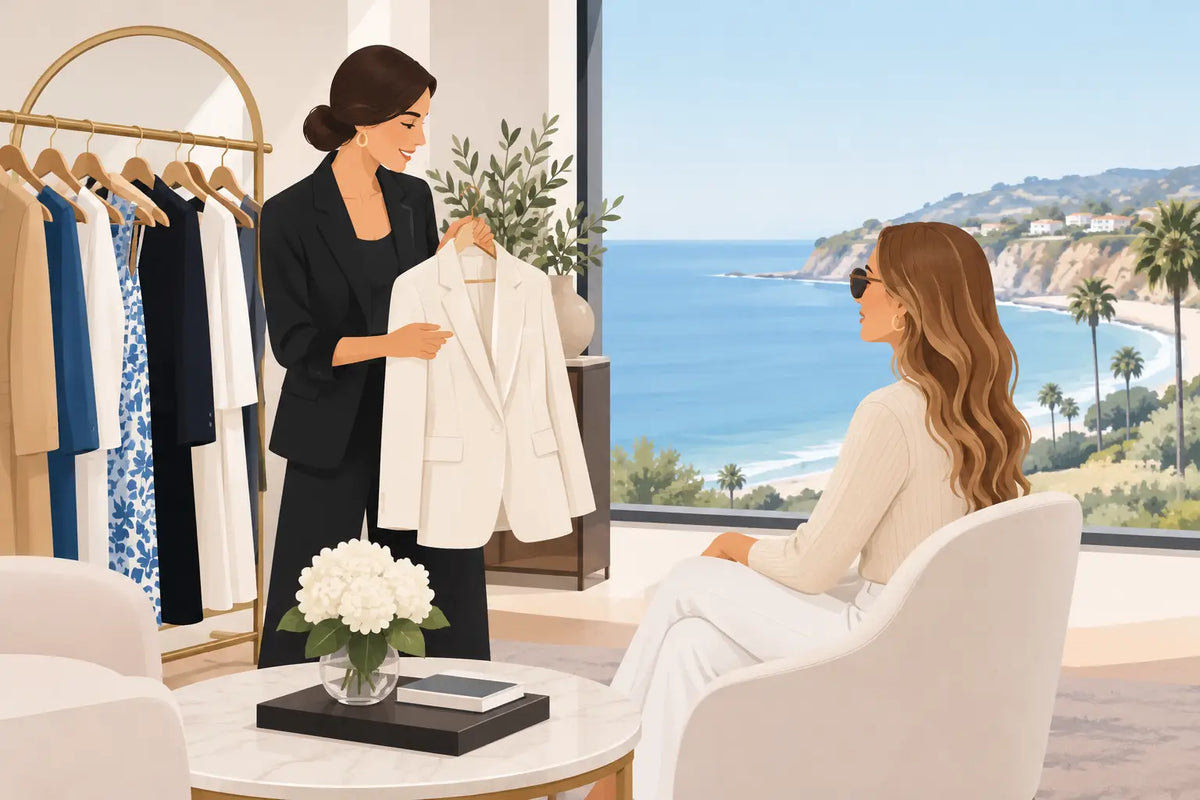
Private Fashion Appointment Laguna Beach
A private fashion appointment Laguna Beach is not a faster version of shopping. It is time set aside for garments that ask to be seen properly: a deconstructed Margiela jacket, a Yohji silhouette whose proportion changes as you move, an early-2000s Gaultier piece with a history beyond its label.
At Anastasia Boutique, the appointment is an entry into a more considered edit. The boutique has worked in this language since 1983, long before archive fashion became a category casually applied to anything out of season. Here, rarity is not a marketing device. It is the result of careful selection, condition, provenance, and the fact that certain pieces no longer exist in meaningful numbers.
A Private Fashion Appointment in Laguna Beach
Some clothes make sense on a rack. Others need space, quiet, and a mirror. Avant-garde fashion belongs to the second category. Its value is often embedded in construction rather than immediate effect: an unusual shoulder line, a hand that changes after wear, a garment cut to sit away from the body, or a textile that reveals its depth only in natural light.
A private appointment offers the conditions to look closely. There is room to consider what a piece is, when it was made, and how it may live within a wardrobe now. This matters whether the purpose is a single acquisition, a red-carpet or editorial pull, or the slow development of a collection.
The experience is especially relevant for clients who have grown tired of luxury retail organized around the obvious. The same seasonal logo pieces appear everywhere. A private viewing makes a different proposition: fewer garments, stronger points of view, and a conversation shaped by taste rather than a transaction clock.
Choose Your World: Now, Then, or The Window
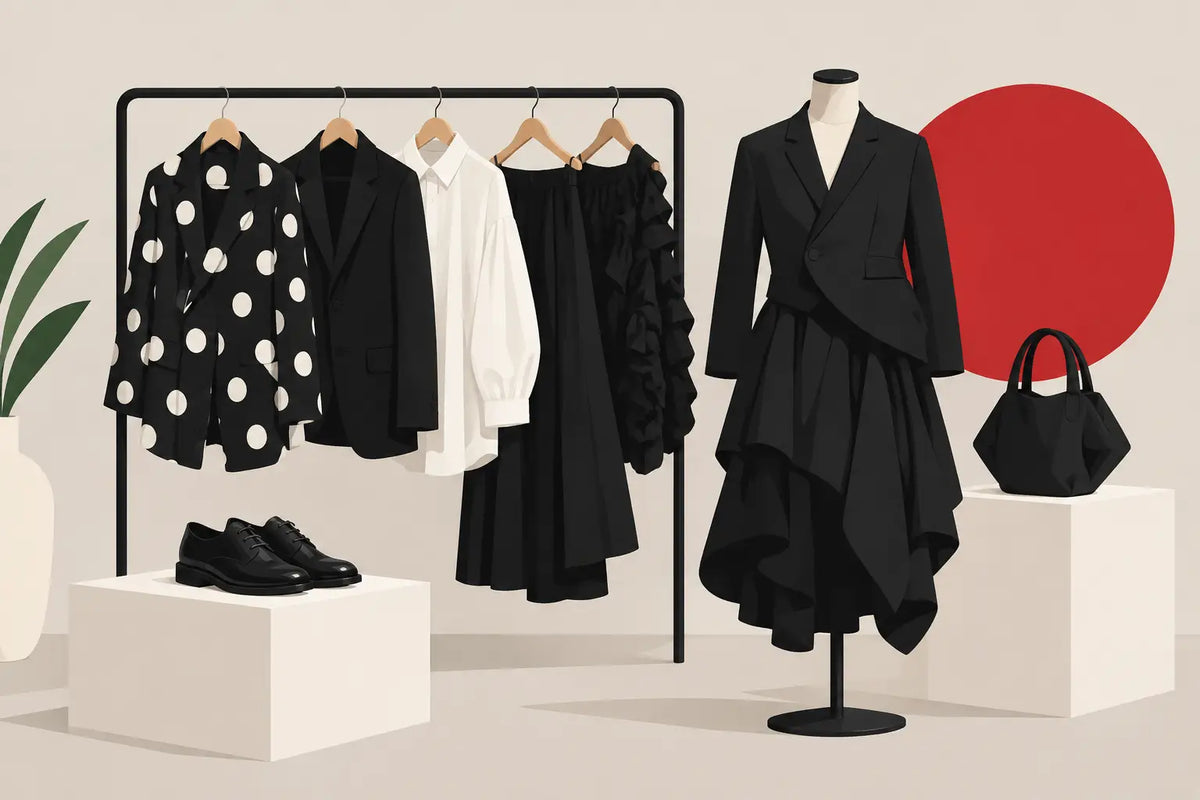
The boutique’s edit moves between distinct temporal worlds. Now brings current-season work from designers whose practice remains rooted in experimentation. Then considers archival garments from the 1990s through the 2000s, a period that continues to define how contemporary fashion understands proportion, identity, utility, and spectacle.
The distinction is useful, but it is not rigid. A current Rick Owens piece may speak directly to an earlier Comme des Garçons garment. Junya Watanabe’s technical intelligence can sit beside the subversive precision of Undercover. A Maison Martin Margiela object can feel more contemporary than much of what arrives in a new delivery. The point is not to dress by decade. It is to recognize a design language and follow it where it leads.
Then there is The Window. This physical-only selection is reserved for the boutique, viewed by appointment at 460 Ocean Avenue. These are one-of-one finds, collector pieces, and garments whose specificity does not translate fully to a product page. They are better encountered in scale, with the fabric in hand and the details visible at close range.
For some clients, The Window is the reason to make the appointment. For others, it becomes the unexpected center of the visit. That is the nature of a serious edit. The piece you came to see may confirm an instinct, but the one that stays with you may be something entirely different.
What the Appointment Makes Possible
The most useful private appointments begin with a point of view, not a rigid shopping list. You may know you are looking for a 1990s Comme des Garçons jacket, a sculptural black boot, or a singular piece for a particular event. You may only know that your existing wardrobe needs tension. Both starting points are valid.
Time allows for comparison. A garment can be tried in more than one size or silhouette. A coat can be considered with the practical questions intact: How does it sit over knitwear? What happens when it is worn open? Is the weight right for Southern California, or is it best understood as a travel piece? Collectible fashion should not be treated as fragile theater, but it should be approached honestly.
Condition is part of that honesty. An archival garment carries time differently than a new one. A fade, a repaired seam, or a softened leather surface may be integral to its character, or it may affect how and when the piece should be worn. The value of an appointment is not simply access. It is context. A knowledgeable viewing distinguishes intentional aging from damage, rarity from novelty, and true personal relevance from a momentary reaction.
For collectors, context also protects discernment. Not every early piece is consequential, and not every rare piece belongs in every collection. A garment may be exceptional yet wrong for your archive, your body, or the life you want it to have. The best acquisition is often the one that continues to reveal itself after the initial thrill has passed.
For Stylists and Creative Professionals
A private viewing can also serve work that requires specificity. Stylists, costume professionals, artists, and image-makers often need pieces with an immediate visual vocabulary that cannot be replicated by standard luxury inventory. A mesh Gaultier top, a distressed Rick Owens layer, or a sharply engineered Junya Watanabe construction carries its own history into an image.
That said, archival fashion is not a costume department. Certain garments need careful handling, and some are best acquired rather than borrowed. The conversation changes depending on whether a piece is intended for a private collection, a personal appearance, an editorial concept, or a long-term creative project. A considered appointment makes room for those distinctions.
How to Arrive With the Right Questions
There is no need to arrive with a dissertation on Japanese avant-garde fashion or a reference folder full of runway images. Familiarity is welcome, but curiosity is enough. Still, it helps to know what you want the appointment to resolve.
You might be building around a particular designer, looking for an alternative to conventional evening dressing, or seeking one garment that changes the temperature of an otherwise disciplined wardrobe. Bring the pieces, colors, and proportions you return to. Mention the occasions you dress for and the things you never wear, even when you admire them. Rejection is useful information in a private appointment.
It also helps to be open about scale. A full-length Yohji coat has a different role than an archival Margiela vest. One may become a daily uniform; the other may be a piece to live with, study, and wear selectively. Neither is more legitimate. The distinction is simply part of choosing well.
Photos can be useful when you are trying to complete a look or work with an existing garment, but they are not a substitute for trying pieces on. The body changes the garment. Posture, movement, and confidence alter the proportion more than a flat image can suggest.
The Value of Seeing It in Person
Online shopping has made fashion accessible, but access is not the same as understanding. A screen can show an item’s outline. It cannot reliably convey density, drape, finish, scent, movement, or the particular charge of encountering a garment with real design history.
This is why appointment-led retail still matters. It creates a setting where judgment can develop without pressure to reduce everything to trend, resale value, or immediate recognition. You can spend time with a piece until its logic becomes clear. Or you can decide it is not yours and leave with a sharper sense of what is.
For Laguna Beach, where personal style often moves easily between art, architecture, travel, and daily life, that level of attention has particular relevance. The strongest wardrobes are rarely built all at once. They are assembled through encounters with objects that hold their ground.
A private appointment is an invitation to make one of those encounters deliberate. Come for a designer, a decade, a silhouette, or simply a feeling you have not found elsewhere. Leave with the piece only if it earns its place.

Leave a comment
This site is protected by hCaptcha and the hCaptcha Privacy Policy and Terms of Service apply.