
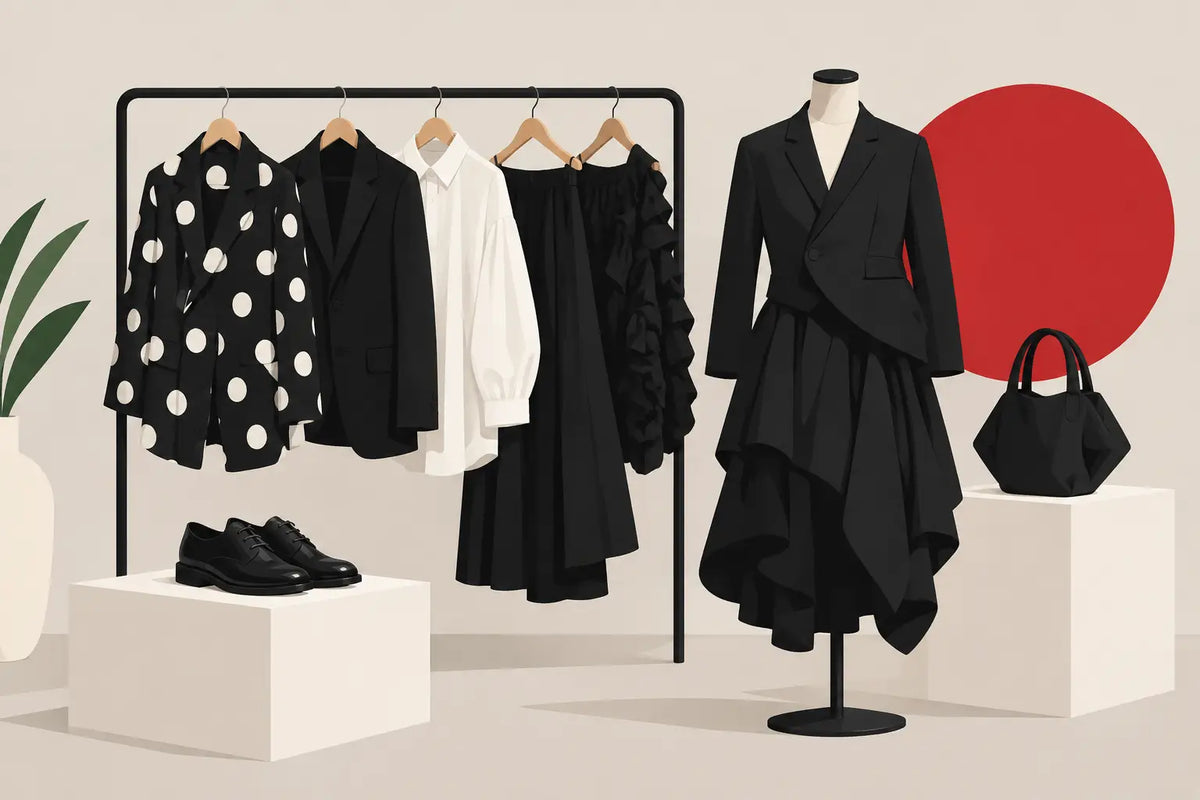
Comme des Garcons Vintage Clothing, Chosen Well
A Comme des Garcons garment can look almost incidental on a hanger, then alter the proportion of a body completely once worn. That tension is why Comme des Garcons vintage clothing remains a serious collecting field. It is not simply about owning an earlier season. It is about recognizing a silhouette, fabrication, or idea that still feels unresolved in the best way.
Rei Kawakubo’s work has never asked to be made easy. Across decades, the house has treated clothing as a site for volume, rupture, surface, absence, tailoring, and humor. Vintage pieces carry that language with a particular clarity. They hold the original material decisions, the period’s cultural distance, and often the evidence of a life lived in them.
What Makes Comme des Garcons Vintage Clothing Distinct
A great archival Comme des Garcons piece does not depend on a logo or a familiar seasonal reference. Its identity is usually structural. A jacket may twist away from conventional balance. A skirt may create volume from a seemingly modest panel. A wool coat may feel formally severe until its raw edge or displaced closure changes the entire reading.
The house has also never been one single visual proposition. Comme des Garcons, Comme des Garcons Homme Plus, Tricot, Robe de Chambre, and the many related lines each carry their own histories and purposes. Some pieces are theatrical and confrontational; others are quiet exercises in proportion, utility, or fabric. A collector may seek a sculptural runway garment, while someone building a working wardrobe may find greater pleasure in an exceptional black knit, a softly distorted blazer, or a densely woven coat.
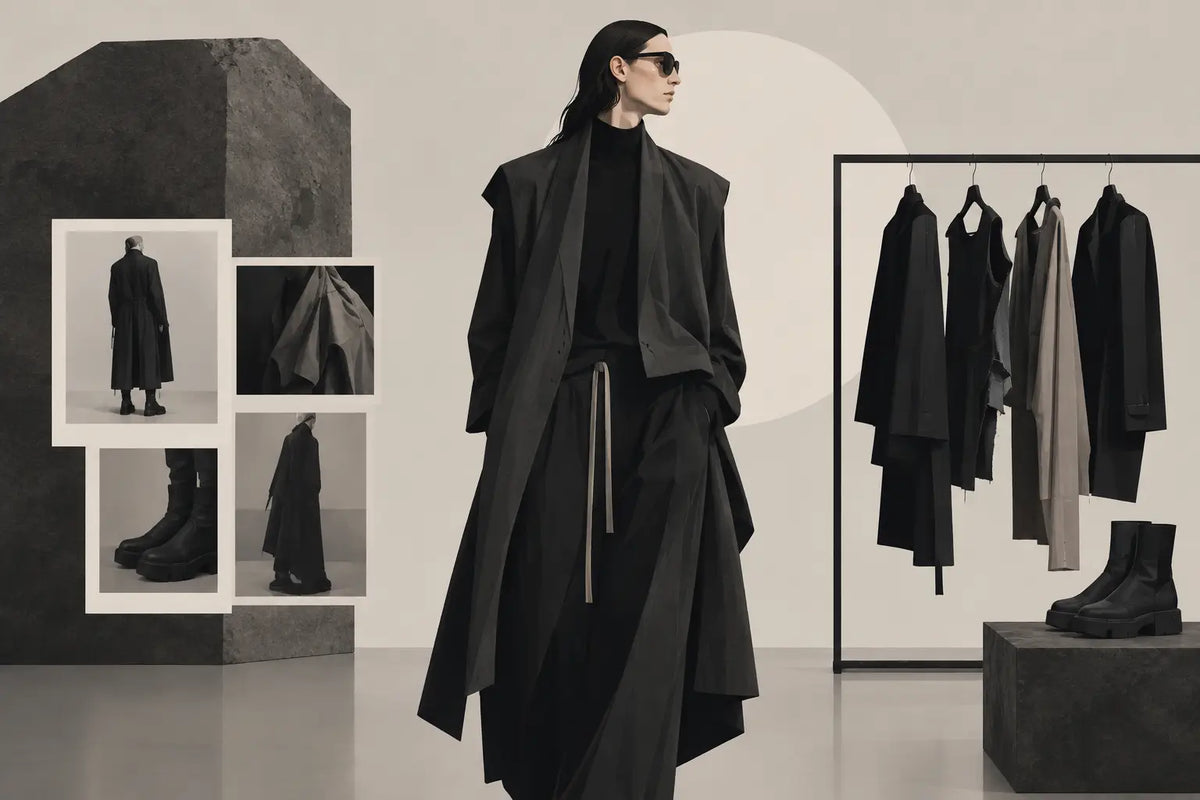
This range is part of the appeal. Vintage does not mean costume. The strongest pieces retain an unusual ability to enter a contemporary wardrobe without becoming nostalgic. A 1990s jacket can sit naturally beside current Rick Owens, Yohji Yamamoto, or Junya Watanabe because the underlying conversation - shape, restraint, and the refusal of easy polish - is still active.
Reading the Garment Before the Label
Labels matter, but they are only one part of the evidence. The best way to understand an older Comme des Garcons piece is to begin with the garment itself. Look at its cut from every angle. Consider where the shoulder sits, how the sleeve turns, whether the hem is deliberately irregular, and what happens when the garment moves rather than hangs still.
Construction tells the fuller story
Comme des Garcons often makes construction visible without making it crude. A seam may become a line of tension. A lining may be omitted to preserve lightness. A panel may appear misplaced until it creates an unexpected volume at the hip or back. These decisions are rarely decorative afterthoughts. They are the point.
Fabric deserves equal attention. A faded black wool, compact boiled knit, papery polyester, brushed cotton, or deliberately crinkled synthetic can say more about a piece than a season name. The hand of the material should support the silhouette. If a jacket’s stiffness creates its architecture, softness may be a concern. If a garment is meant to collapse, some relaxation may be entirely correct.
Fit should be approached with similar care. Marked sizes, especially in Japanese production, are useful but not definitive. Comme des Garcons has long used proportion as a design tool. Oversized shoulders, abbreviated sleeves, narrow armholes, dropped crotches, and compressed lengths may be intentional. Measurements establish scale; trying a piece on reveals its logic.
Labels, dates, and provenance
A label can identify a line, a country of manufacture, and sometimes an era, but authentication is rarely solved by one tag alone. Label designs evolve. Production varies by line. Older garments may have altered care labels, missing size tabs, or signs of professional repair. The label should agree with the construction, fabric, finishing, and known design language of the piece.
Provenance adds substance where it exists. Original receipts, runway references, prior collection records, and a credible chain of ownership can strengthen confidence and collector relevance. Yet not every important garment arrives with a complete paper trail. For much vintage fashion, informed examination remains the central discipline.
Condition Is Part of the Object
Collectors often speak of condition as though it were a simple hierarchy from perfect to imperfect. For archival clothing, it is more useful to ask whether the condition is compatible with the garment’s age, fabrication, and intended effect.
A near-pristine early piece may be rare and desirable, particularly when its material is fragile or its design is difficult to replace. But gentle fading, softened edges, and repaired areas can also be part of an honest history. Black cotton and wool, in particular, often develop a tonal depth through wear that cannot be replicated by a new garment.
The distinction is between patina and compromise. Small signs of wear may leave the structure intact. Brittle coating, weakened fabric at stress points, pervasive moth damage, altered proportions, or deteriorating bonded materials require a more exact assessment. A collectible piece can still be worth owning in fragile condition, but it may belong in a collection rather than regular rotation.
Repairs are not automatically disqualifying. A thoughtful repair can preserve a garment and extend its life. What matters is whether it respects the original shape and material. Poor alterations, especially at shoulders, armholes, and hems, can erase the very proportions that make the design significant.
Choosing Between Iconic and Personal
There is a natural pull toward the most recognizable seasons and silhouettes. They are historically important, frequently referenced, and often scarce. But an iconic piece is not necessarily the right first acquisition. It may be difficult to wear, delicate, or so specific that it functions better as an object of study than as clothing.
Personal affinity is a more durable guide. The right piece should sharpen what is already present in a wardrobe or open a direction that feels convincing. Someone drawn to precise tailoring may respond to a deconstructed wool jacket. Someone who dresses in monochrome may find the necessary disruption in texture rather than color. Another collector may want the visual force of an exaggerated silhouette, accepting that it will be worn rarely.
This is where vintage acquisition differs from seasonal shopping. The question is not whether a piece answers a current trend. It is whether its design has enough internal life to remain compelling after the first recognition fades.
The Value of Seeing Archive Fashion in Person
Photographs establish an outline, but archive garments are physical arguments. Weight, density, drape, interior finishing, and scale are difficult to fully translate on a screen. This is especially true of Comme des Garcons, where a garment’s apparent awkwardness may become its elegance once it is handled or worn.
In-person viewing also makes condition easier to judge. One can see the true cast of a black fabric, locate a repair, assess the resilience of a knit, and understand whether an unusual cut feels liberating or restrictive. For one-of-one pieces, this encounter is not a luxury add-on. It is part of responsible collecting.
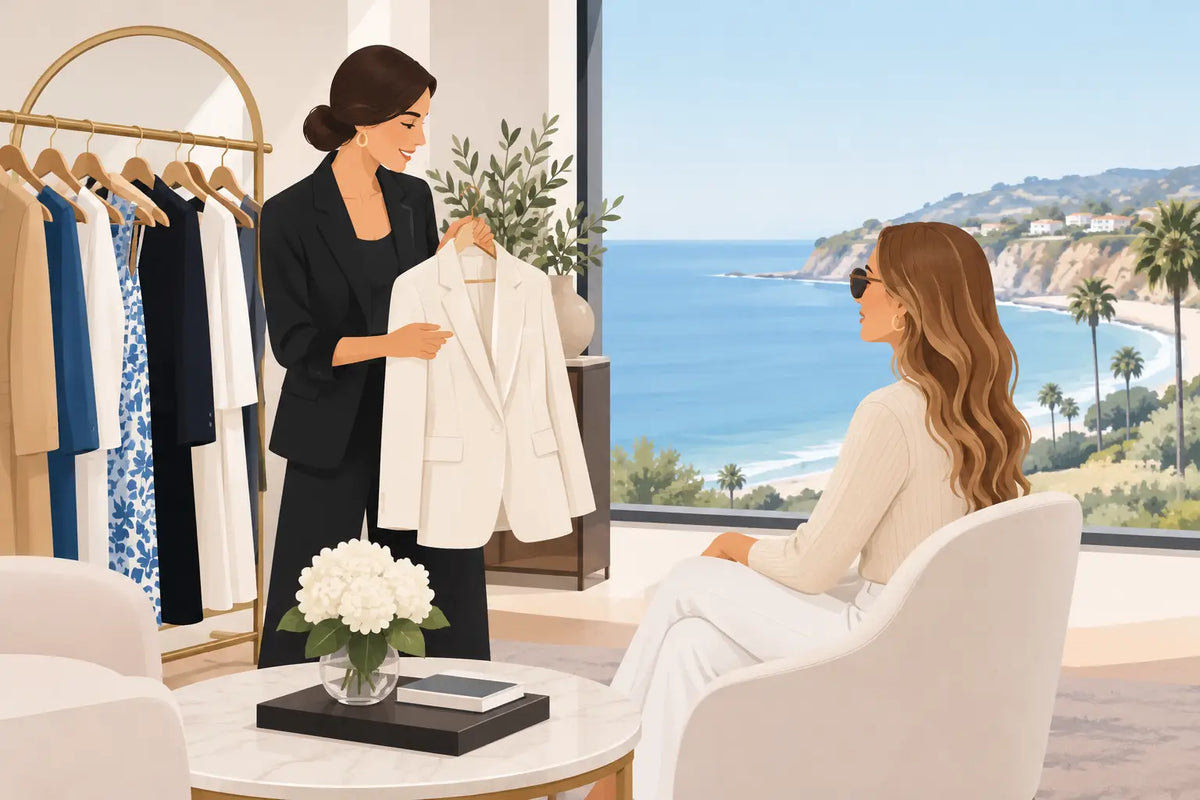
At Anastasia Boutique, the rarest selections in The Window are available only by appointment at 460 Ocean Avenue in Laguna Beach. That setting allows the time a significant garment requires: not a hurried transaction, but a closer reading of the object, its era, and its place in a personal collection.
A worthwhile Comme des Garcons vintage piece should continue to reveal itself. Let the first response be instinctive, then give the garment enough time to prove that instinct right.

Leave a comment
This site is protected by hCaptcha and the hCaptcha Privacy Policy and Terms of Service apply.