
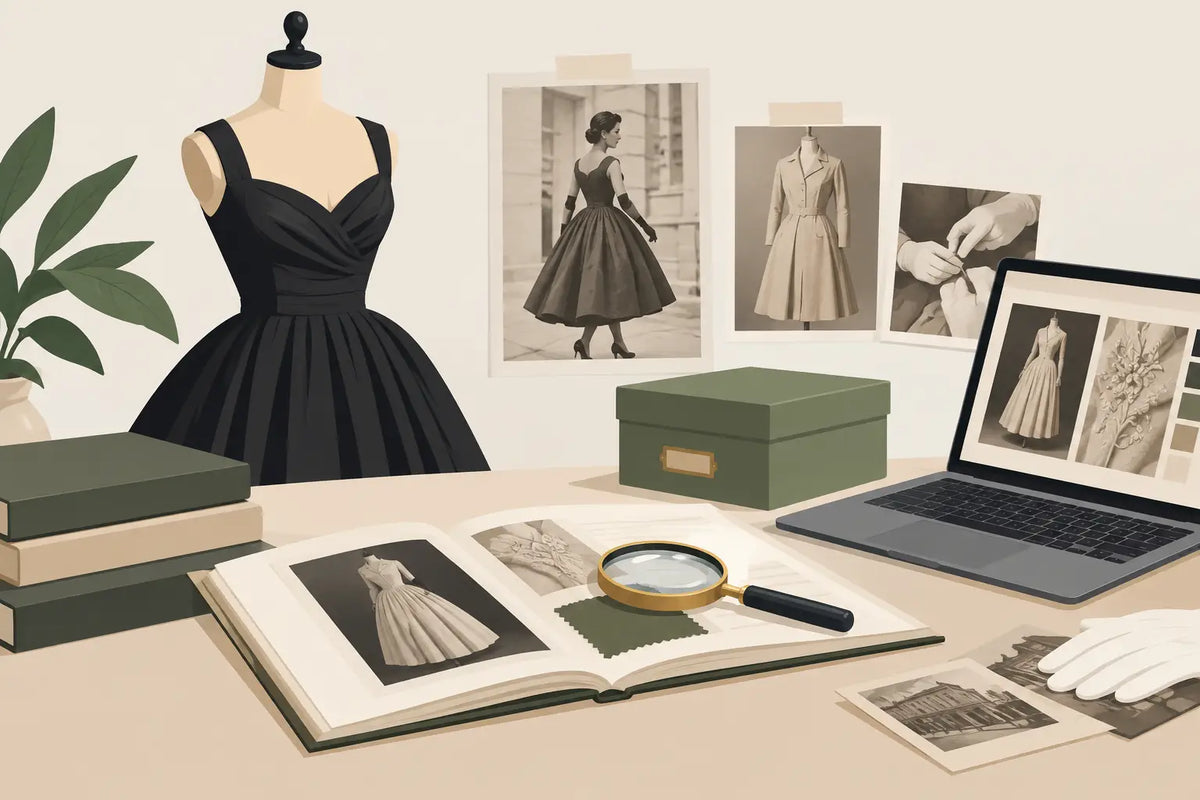
A Collector’s Guide to Fashion Provenance Research
A garment can be rare without being significant. It can carry the right label and still be misdated, altered, incomplete, or disconnected from the collection that gave it meaning. This guide to fashion provenance research is for the collector who wants to read beyond the name at the neckline - toward the evidence held in fabrication, construction, context, and custody.
For avant-garde fashion, provenance is not a decorative footnote. It determines whether a distressed knit is an early Maison Martin Margiela object or a later interpretation; whether a sculptural Comme des Garçons jacket belongs to a landmark runway season; whether a Rick Owens leather piece has retained the silhouette, hardware, and finish intended by the designer. Research protects the investment, but more than that, it preserves the garment’s place in design history.
What Fashion Provenance Actually Establishes
Fashion provenance is the documented and material history of a piece. At its strongest, it connects a garment to its designer, approximate season or year, original production details, prior ownership or retail source, and condition over time.
Not every archival piece arrives with a runway look number, an original receipt, and an unbroken record of custody. That standard is uncommon, particularly for garments made before online retail became a permanent archive. The goal is not to demand impossible certainty. It is to build a clear, proportionate case from the evidence available.
A piece with a boutique receipt, period editorial image, intact labels, and an identifiable collection reference has a different level of support from one identified only by a seller’s memory. Both may be genuine. They should not be valued or described with the same confidence.
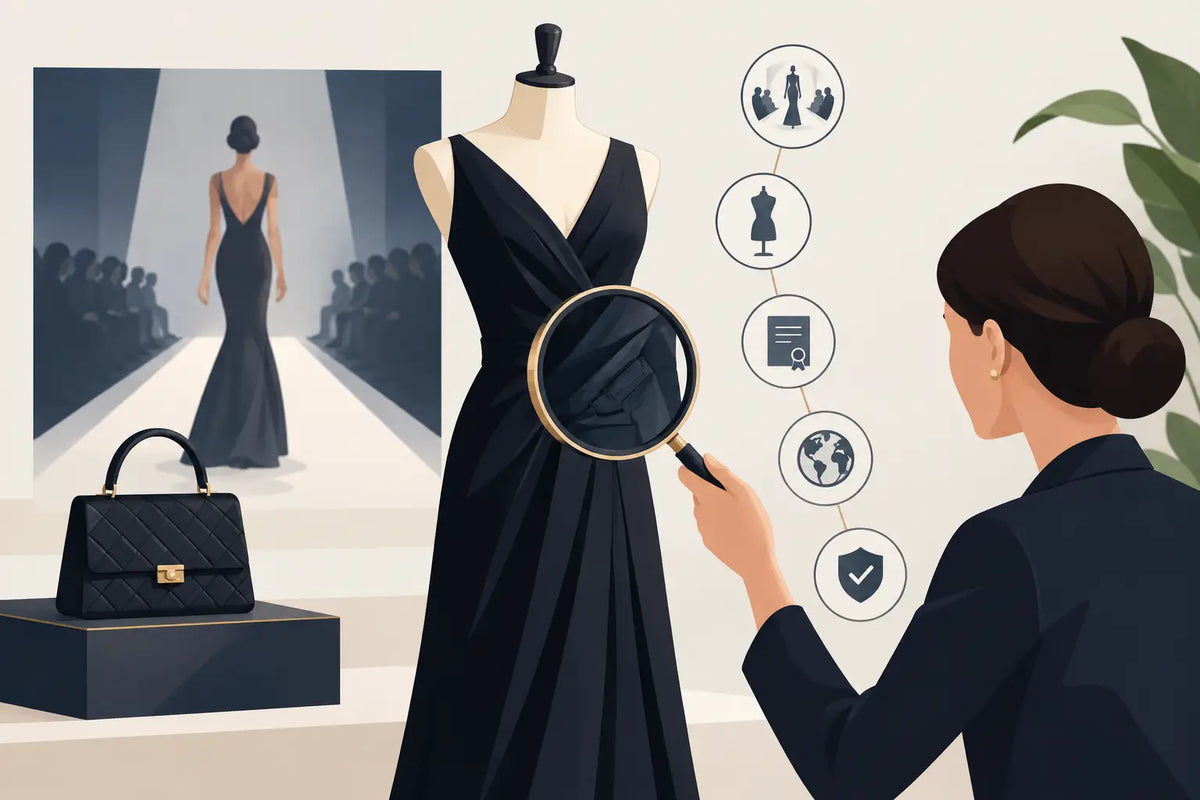
Provenance also differs from authentication. Authentication asks whether a piece is what it claims to be. Provenance asks where it has been, what it originally was, and why its details matter. The two inquiries overlap, but neither replaces the other.
Start With the Garment, Not the Listing
Seller language can be useful, especially when it comes from a long-standing specialist. It should still be treated as a starting point. Begin with the object itself.
Read every label. Main labels, size labels, care labels, composition tabs, factory codes, and import tags can all offer clues. A label alone rarely dates a garment with precision, but shifts in typography, country of manufacture, material disclosures, and brand naming conventions can narrow a range considerably. Maison Martin Margiela’s label systems, for example, carry distinct informational value, yet their presence must be considered alongside the garment’s make and era.
Then study the construction. Look at seam finishing, lining attachment, closures, zipper pulls, snaps, button markings, knit density, hems, and internal reinforcement. Experimental designers often make construction part of the idea. Junya Watanabe’s engineered panels, Yohji Yamamoto’s controlled asymmetry, and Jean Paul Gaultier’s corsetry and printed mesh each leave evidence that a generic description cannot capture.
Fabric deserves the same attention. Ask whether it behaves as it should. An early washed leather may have a particular hand, weight, and irregularity. Bonded textiles can delaminate with age. Coated cotton, foam, rubberized finishes, and synthetic mesh often reveal their condition differently than conventional wool or silk. Material knowledge helps establish both era and risk.
Build an Evidence File Before You Buy
For a serious acquisition, assemble a small dossier. Photograph the garment front and back, every label, closures, hardware, lining, notable construction, and all flaws. Preserve the seller’s original description and any accompanying documentation. If the garment is said to have appeared in an editorial, runway presentation, museum exhibition, or private collection, record the claim exactly as stated.
The most useful file usually includes four forms of evidence:
- clear detail photographs of labels, construction, and condition
- measurements taken from the actual garment
- period references such as collection imagery, lookbooks, or editorial context
- documentation of source, including invoices, receipts, correspondence, or prior specialist descriptions
Measurements deserve unusual care. Vintage sizing is inconsistent, and many conceptual garments are designed to sit away from conventional fit logic. Record chest, waist, hip, shoulder, sleeve, rise, inseam, and length where relevant, while noting whether the piece is intended to wrap, drape, stretch, or distort on the body. A numerical size is not provenance, but accurate measurements prevent later confusion about whether a garment has shrunk, been altered, or simply follows an unconventional cut.
Dating a Piece Without Forcing Certainty
The temptation is to assign an exact year. Often, an informed range is more honest and more valuable. “Circa 1998-2001” can be stronger than a definitive 1999 claim supported only by resemblance.
Use collection imagery carefully. A runway image may confirm a fabric, silhouette, or styling idea, but it does not automatically establish that every related variation appeared on the runway. Designers commonly produced showroom, retail, and regional variations. Colorways may differ. A retail jacket may use a related pattern with a changed closure or lining. These distinctions are not defects in the research. They are part of it.
Consider the chronology of the house. Changes in creative direction, licensing, production location, and label nomenclature are often more revealing than a single visual match. Undercover’s early output, for instance, must be read through its own underground context rather than against the production scale of later collections. The same is true of transitional periods at major houses, when design language and manufacturing practices may overlap.
A well-researched description separates what is known from what is inferred. State that a piece is documented, attributed, comparable, or believed to be from a period. Those terms are not evasions. They protect the record.
Condition Is Part of the History
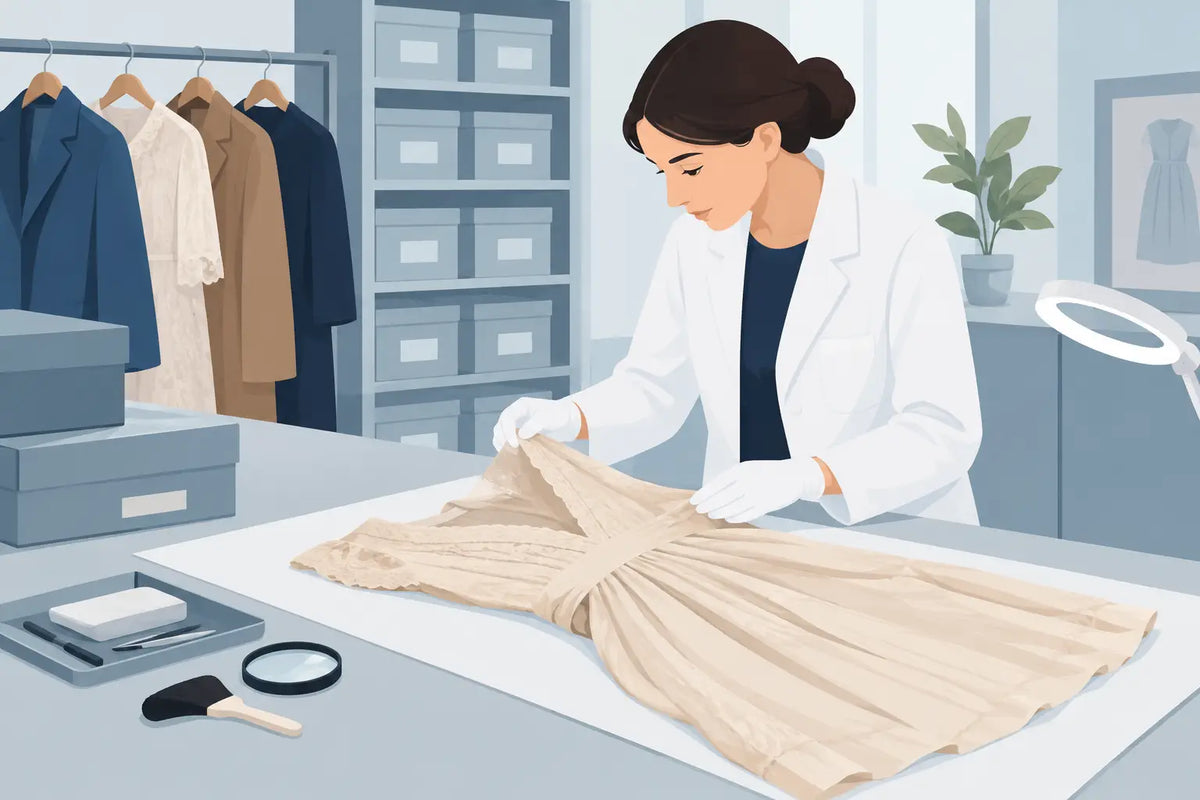
Archival condition is not a binary. A 1990s garment may be beautifully preserved and still show expected aging in elastic, adhesive, coatings, leather, or dyed fabric. Some wear is evidence of life; some changes materially affect value, wearability, and future conservation.
Ask whether alterations are reversible. Original hems, belts, detachable elements, straps, and hardware can be central to the design. Missing components matter, especially where a garment’s silhouette depends on them. A replaced zipper may be practical, but it should be disclosed and evaluated in relation to rarity. A carefully repaired seam is different from widespread structural stress.
Be particularly attentive to concealed damage. Examine underarms, crotch seams, pocket corners, linings, leather edges, coated surfaces, and areas around fasteners. Request photographs in natural light where possible. Black fabric can hide fading, shine, and moth activity; white or pale pieces may reveal oxidation and storage marks. If a material is fragile, the question is not simply whether it can be worn. It is whether wearing it changes the object you intend to keep.
Read the Source as Closely as the Piece
A seller’s history cannot substitute for material evidence, but it changes the level of confidence. Specialists with long relationships to designers, collectors, and private wardrobes may retain records that are unavailable elsewhere. Original boutique sourcing also carries weight, particularly when a piece has remained within a documented collection.
That said, provenance should survive scrutiny. Ask direct questions: Where was the piece acquired? Has it been altered, repaired, cleaned, or stored under particular conditions? Are any components missing? Is the date documented or estimated? A serious seller will distinguish between knowledge, informed attribution, and speculation.
For singular garments, in-person examination remains irreplaceable. Weight, smell, textile integrity, interior finishing, and the way a silhouette moves cannot be fully established through a screen. At Anastasia Boutique, the most exceptional pieces in The Window are encountered by appointment for precisely this reason: certain objects require presence.
A Guide to Fashion Provenance Research for Long-Term Collecting
The best research habits are quiet ones. Keep acquisition records organized. Photograph a piece before and after conservation. Store detached components together. Do not discard old invoices, garment bags, labels, or notes from the source. These remnants become evidence over time.
It also helps to accept that some questions will remain open. Fashion history contains gaps, especially for independent labels, early collections, limited retail runs, and garments that passed privately between collectors. An unresolved detail should lower certainty, not extinguish curiosity.
Choose pieces whose evidence is commensurate with their claim. A rare object with a partial but credible record may be more compelling than a loudly described “grail” with no support beneath the language. When the garment, the documentation, and the source tell the same story, provenance becomes something more lasting than proof of purchase: a way of carrying design history forward with care.

Leave a comment
This site is protected by hCaptcha and the hCaptcha Privacy Policy and Terms of Service apply.