
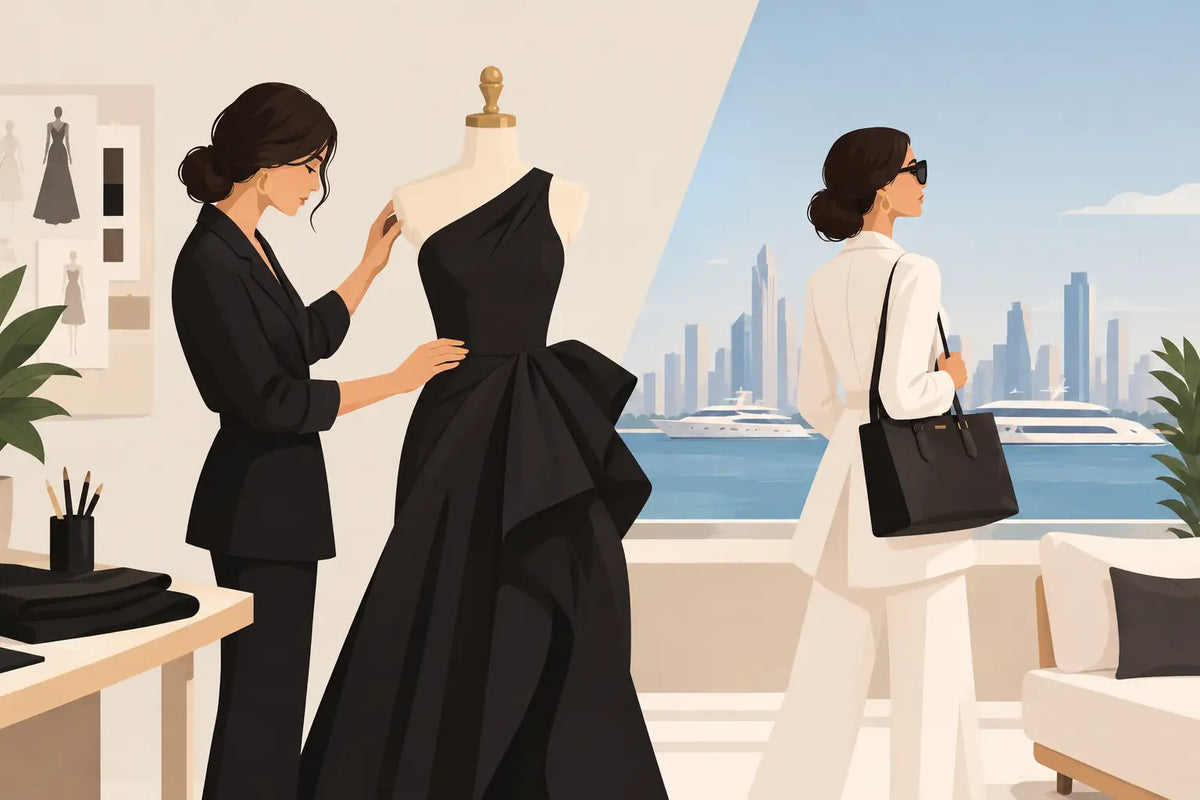
One of One Designer Fashion Has a Different Life
A garment becomes one of one designer fashion long before it is called rare. It begins with a particular decision: a fabric developed in a limited run, a hand-finished alteration, a runway sample that never entered production, or an archive piece whose survival is improbable. The result is not simply something few people own. It is something that carries its own conditions of existence.
For the collector, this distinction matters. Luxury is widely available. Singular design is not. A recognizable logo may signal access; a one-of-one piece signals an eye, a history, and a willingness to live outside the seasonal rhythm.
What Makes One of One Designer Fashion Distinct
A one-of-one garment is not defined by a low production number alone. A jacket made in a run of twenty can be scarce, but it is still a repeated object. A single piece has a more specific identity. It may be a prototype, an artist-customized version, a couture construction, an altered archival garment, or an experimental piece made for a presentation, editorial, or private client.
The strongest examples preserve evidence of that specificity. An interior label may mark a sample. A fabrication may be absent from commercial production. The cut may differ from the lookbook version: a shifted shoulder line, an unfinished edge, a different closure, a removed panel. These are not flaws to be corrected. They are often the very details that locate the garment within a designer’s process.
Maison Martin Margiela’s early work offers a clear frame for this way of looking. The tension between anonymity and authorship, repetition and alteration, made the garment itself the record. A changed lining or a hand-marked detail could carry as much significance as a visible signature. With Comme des Garçons, Yohji Yamamoto, Rick Owens, Junya Watanabe, Undercover, and Jean Paul Gaultier, singularity may appear through construction, material, or the moment in each designer’s vocabulary that the piece belongs to.
Rarity Is Only the Beginning
Scarcity can be manufactured. A limited edition with a numbered hangtag may be genuinely desirable, but numbering does not automatically create cultural weight. One-of-one design becomes meaningful when rarity is accompanied by authorship, condition, and context.
Consider two black dresses from the same decade. One is a widely sold seasonal style in excellent condition. The other is a documented runway sample in a related silhouette, with hand-applied hardware and an unconventional inner structure. The first may be easier to wear and easier to replace. The second may be more difficult in every practical sense, yet its difficulty is part of its value. It asks the owner to understand it on its own terms.
That does not mean every singular piece belongs in every wardrobe. Some are best approached as collectible objects. Others become the center of a personal uniform. The useful question is not whether a garment is rare enough. It is whether its singularity remains legible when worn, handled, repaired, and remembered.
Provenance Gives the Garment Its Voice
In archival fashion, provenance is not decorative background. It is part of the object. The designer, season, collection context, original purpose, previous ownership, and condition all shape how a garment is understood.
A well-preserved early-2000s Gaultier mesh piece, for example, carries a different charge when its print, label variation, and construction can be placed accurately within the period. The same is true of a deconstructed Margiela knit, an Owens leather piece with a discontinued treatment, or a Watanabe hybrid garment made from an unusual technical textile. Familiarity with the house is useful, but close looking matters more.
Condition requires judgment rather than perfectionism. Age can leave evidence: softened leather, faded pigment, repaired seams, oxidation on hardware. Some changes reduce value, particularly when they compromise structure or erase original material. Others are consistent with a garment that has lived. A careful repair, when disclosed and sensitively executed, may preserve a piece that would otherwise be lost.
For this reason, provenance should be considered alongside condition, not after it. An immaculate garment with no clear history may be less compelling than a carefully conserved piece with a credible and specific past.
The Difference Between Archive and Costume
There is a temptation to treat unusual fashion as theatrical evidence of another era. That approach flattens the work. Archive is not costume when it retains a relationship to the designer’s ideas, and when the wearer understands the silhouette as more than visual novelty.
A sculptural Comme des Garçons coat does not need to be softened into convention. A Yohji Yamamoto jacket does not need a trend-driven explanation. These pieces can be worn plainly, even quietly, because their intelligence is in proportion, line, imbalance, and restraint. The best styling often creates enough space for the garment to remain itself.
This is also why one-of-one fashion resists the pressure to perform online. A single image can show surface, but rarely weight, movement, interior construction, or how a fabric reacts to light. Some garments reveal their logic only in person, on a body, over time.
Why the Physical Encounter Still Matters
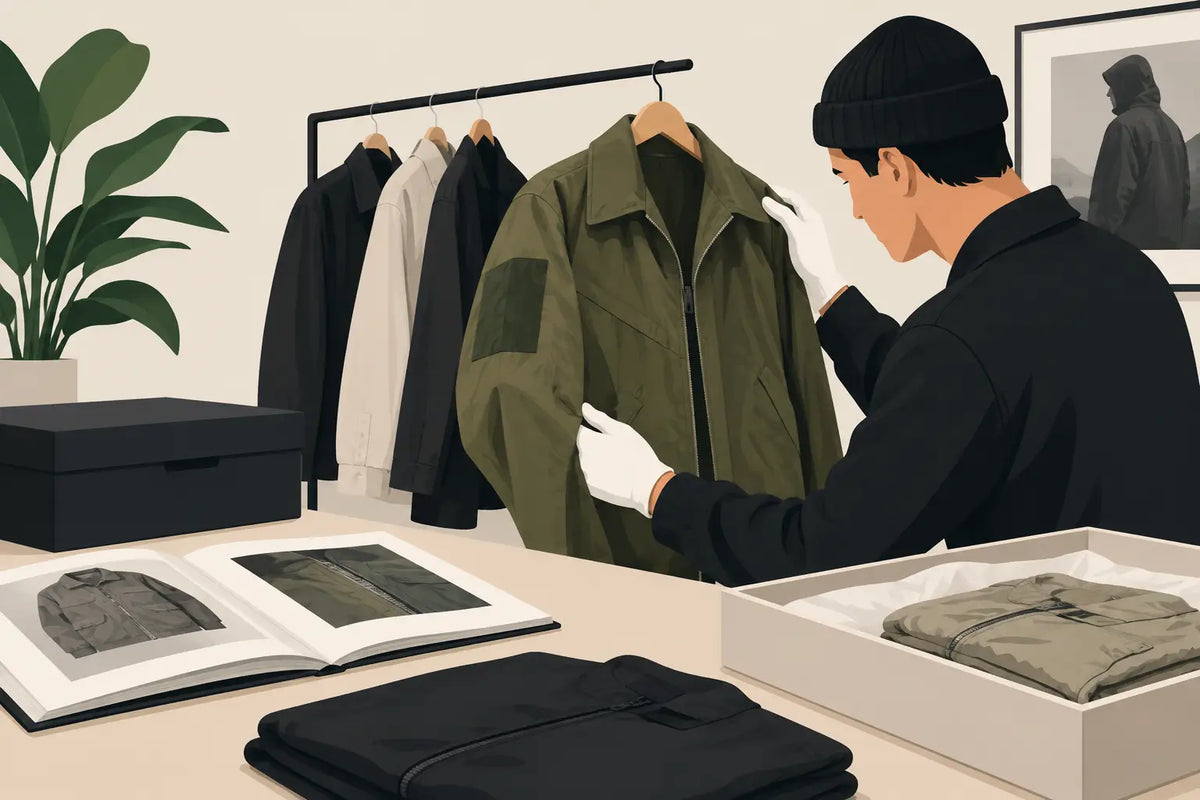
A one-of-one piece should be examined without haste. Look inside. Feel where the garment has been cut on the bias, reinforced, left raw, or deliberately misaligned. Notice whether the hardware is structural or ornamental, whether the color has depth, whether the fabric has memory.
Fit is equally complex. Standard sizing offers little guidance for avant-garde design, especially in archive. A piece may be intended to sit low on the shoulder, collapse at the waist, or create volume several inches away from the body. A technically correct size can still be the wrong relationship.
This is the value of an appointment-led encounter. At Anastasia Boutique, The Window is reserved for pieces that deserve this kind of attention: rare garments encountered in person, by appointment, at 460 Ocean Avenue. The setting allows for the conversations that an online product page cannot fully contain. Not every extraordinary object needs to be immediately available, easily categorized, or reduced to a transaction.
Collecting With Discernment
Building a personal collection is not the same as accumulating scarce objects. The most enduring wardrobes tend to have an internal point of view. A collector may return to a particular decade, a designer’s early language, a recurring material, or the dialogue between two houses. The connection does not need to be academic, but it should be real.
Before acquiring a singular garment, consider its construction, its condition, and whether the provenance is credible. Then consider a less measurable question: does it change the shape of what you already own? The right piece can make familiar clothing feel newly deliberate.
Practical care is part of ownership. Store garments away from direct light. Use appropriate support for heavy knits and fragile shoulders. Avoid routine dry cleaning for delicate or treated fabrics. Photograph significant details when the piece enters your collection, including labels, interiors, closures, and existing wear. This is useful for insurance, future conservation, and the garment’s eventual next life.
Choose the Piece That Cannot Be Repeated
One-of-one designer fashion is not a race toward the most difficult item to find. It is a way of choosing objects with enough thought, tension, and history to remain interesting after novelty has passed. The rarest garment is not always the right one. The right one is the piece whose material presence continues to ask something of your eye.
Choose your world carefully. Then allow a singular garment to give that world a sharper edge.


Leave a comment
This site is protected by hCaptcha and the hCaptcha Privacy Policy and Terms of Service apply.